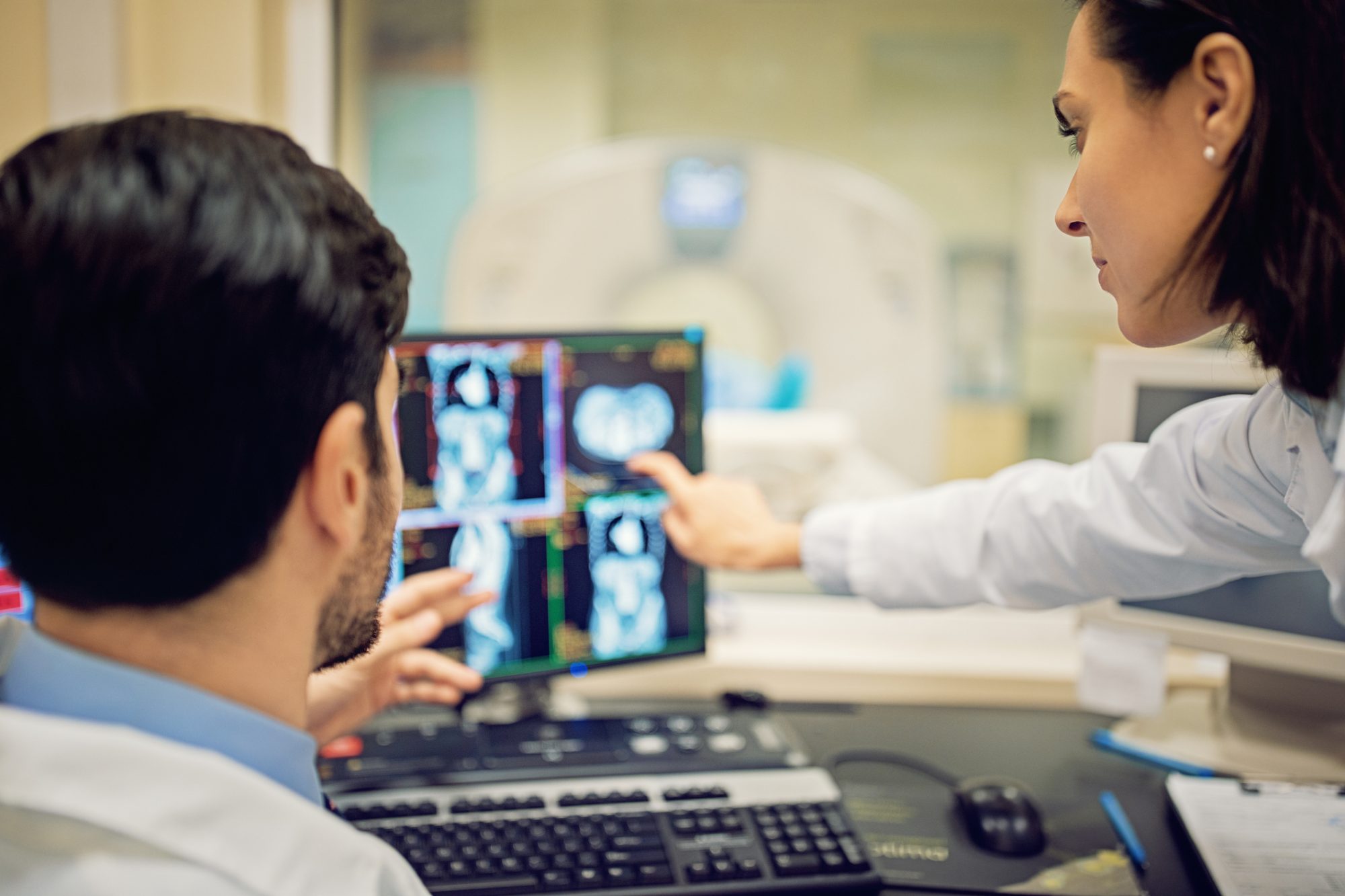
Researchers in Edinburgh have developed a rapid stool-based test aiming to improve the diagnosis of inflammatory bowel disease and reduce the need for invasive procedures.
Researchers have developed an AI stethoscope that discovers heart conditions in 15 seconds, giving NHS GPs a quick and simple tool to spot problems earlier.
Mike Taylor from the Digital Accessibility Centre highlights the barriers to digital accessibility and the importance of understanding access challenges in project planning. He also explains the role of assistive technology in enabling independent access to digital content.
A team of researchers at Argonne National Laboratory has developed a groundbreaking technique that allows them to explore quantum behaviour in materials at a tiny scale, just a few nanometers from the surface.
NICE has conditionally recommended six digital technologies to support cardiac rehabilitation, enabling remote monitoring and patient support while further evidence is evaluated.
Surabhi Srivastava, Commercial Head UK and EU at Qure.ai, discusses how integrating artificial intelligence can reduce chest X-ray reporting times and accelerate early lung cancer diagnosis.
A new study links excessive screen time in children and teens to higher risks of high blood pressure, cholesterol, and insulin resistance, especially when sleep is limited.
With the global demand for clean, sustainable energy continuing to intensify, scientists are starting to use innovative technology to help fast-track the transition: AI-powered digital twins.
A new report, jointly published by EIT Health and EIT Digital, challenges the idea that coding skills alone drive success in Europe’s AI startup ecosystem.
The 2025 Joint EU-UK Summer School on Optical Interconnect for AI, Hyperscale, Space and Quantum was held in St Andrews, Scotland, this July, bringing together leading researchers, engineers, and innovators from across Europe and the UK.
The United Kingdom Atomic Energy Authority (UKAEA) has taken the next step towards the future of fusion energy by commissioning two advanced additive manufacturing machines.
University of Illinois engineers have created a groundbreaking eye-safe crystal laser. This first-of-its-kind design, utilising a buried glass-like layer, promises safer sensors and smarter tech for defence, autonomous vehicles, and advanced applications/
Science Creates has worked in partnership with the UK Research and Innovation (UKRI) to launch the third round of their flagship UK-wide engineering biology accelerator.
Dominic Norton from Spitfire Network Services emphasises the importance of understanding the differences in fibre connectivity, highlighting the need to discern variations in quality and technology, while cautioning consumers against making choices based solely on price.